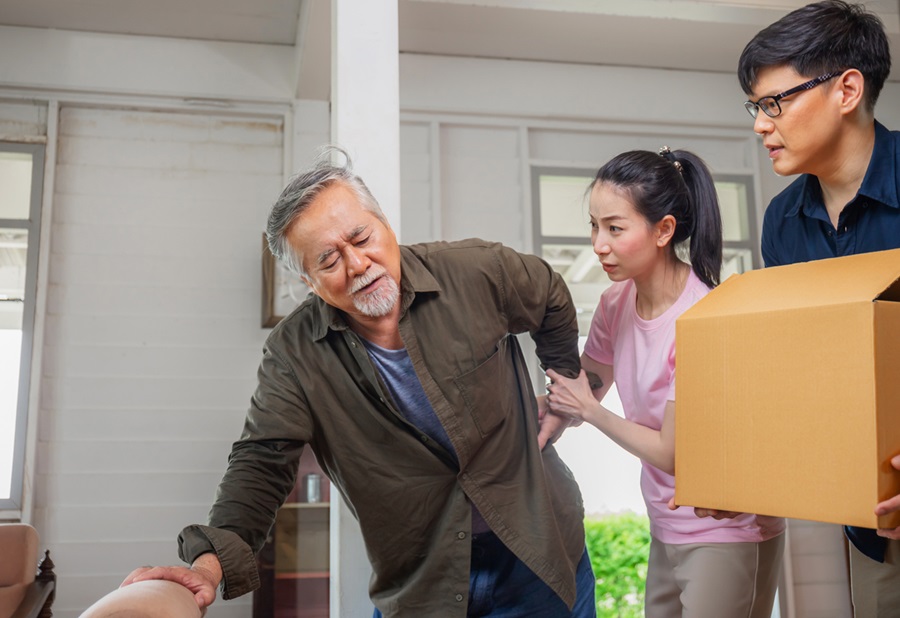

Imagine the following scenario: you’re experiencing a dull ache between your lower ribs and the top of your buttocks. You’re not sure what brought it on and the pain doesn’t seem to be going away. Instead, it has spread to your legs and is making it hard to tackle daily activities like getting dressed on your own, cooking, and participating in social events. As a result, you feel down and stressed. This is just one example of what low back pain can look like and how it can impact our quality of life (1;2).
Low back pain is one of the main causes of disability across the world (1). If we’re lucky, it’s short-lived and lasts less than six weeks, which is known as acute low back pain. Unfortunately, sometimes the pain stretches beyond that and lasts six to twelve weeks, aka subacute low back pain, or longer than twelve weeks, aka chronic low back pain (1;2). Regardless of the duration, what may be surprising to some is that we don’t know the specific cause of the pain in about 90% of cases (1). This is called non-specific low back pain (1;2).
While the cause is often a mystery, strategies that aim to help reduce pain and increase function are available. These include non-medicine and non-surgical options, such as acupuncture, advice from a medical professional, exercise, psychological therapies, and multidisciplinary therapies, which are generally the first treatment options recommended (2). With more than 840 million people set to be affected by low back pain by 2050, we need a better understanding of what people living with it can add to their treatment toolkits (1;2). To learn more, let’s look at a systematic review that investigated the effectiveness of non-medicine and non-surgical strategies in adults with non-specific low back pain (2).
What the research tells us
The review found that several non-medicine and non-surgical strategies can be effective in reducing low back pain and improving function by small to medium amounts. However, what works varies based on the subtype of low back pain and outcome we’re looking at. Here’s a breakdown of the main positive results:
- In adults with acute low back pain (lasting less than six weeks), advice encouraging them to remain active likely decreases pain and increases function compared to advice encouraging them to rest in their beds. As the saying goes, “motion is lotion”. Benefits are seen for up to three months.
- In adults with subacute low back pain (lasting between six and twelve weeks), multidisciplinary therapies likely decrease pain compared to usual care. Multidisciplinary therapies tackle the mental, physical and social elements associated with low back pan and are delivered by a diverse team of healthcare providers that specialize in different areas. Benefits are seen at one year or longer.
- In adults with chronic low back pain (lasting longer than twelve weeks), acupuncture, exercise, and multidisciplinary therapies likely decrease pain and enhance function compared to placebo or no treatment or usual care. Psychological therapies, such as those that tackle muscle relaxation, fear, and managing one’s condition, also likely reduce pain compared to usual care. Benefits are seen from three months to a year.
More research is needed to gain a better understanding of the effectiveness of other non-medicine and non-surgical strategies and safety implications (2).
If you deal with low back pain of any variety, consult your healthcare team about the pros and cons of available strategies and develop a tailored treatment and management plan. Remember, with options comes the ability to choose what works best for you based on your needs and preferences.
Tell us what you think
Give us your feedback on this content by answering a few questions. Your participation will help us improve this resource. Take the survey.