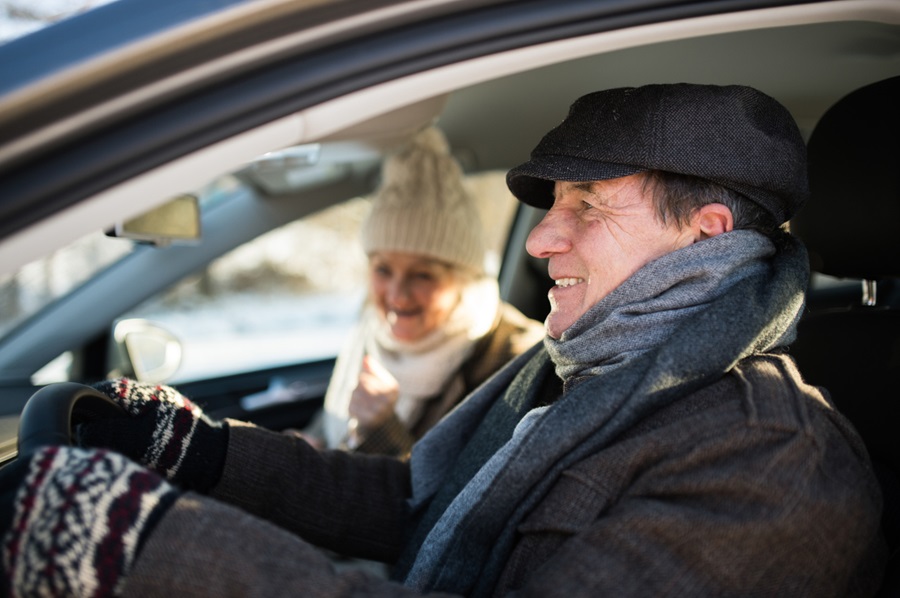

For many older adults, driving is an important part of maintaining independence, especially during the winter months, when walking or taking public transit can be more challenging. However, snow, ice, shorter daylight hours, and colder temperatures can all make winter driving more demanding. With a few extra precautions and thoughtful planning, you can continue to drive safely and confidently all season long.
Maintain your vehicle in winter conditions
Keep your gas tank at least half full to avoid fuel line freeze-ups and to ensure you have enough fuel in case of delays. It’s also important to check that your battery, brakes, windshield wipers, and heating system are in good working order.
Consider keeping a winter emergency kit in your car, including a flashlight, warm blanket, ice scraper, snow brush, and a phone charger or power bank.
Adjust your driving habits
Winter driving often requires slower speeds and greater following distances. Snow and ice reduce traction, meaning it takes longer to stop. Gentle braking and smooth steering can help prevent skidding. If conditions feel uncomfortable or unsafe, it’s okay to delay your trip or choose an alternate day to drive.
Shorter daylight hours can also affect visibility. If possible, plan errands during daylight hours and avoid driving at night, when glare from headlights reflecting off snow can be more difficult to manage.
Keep vision and hearing in check
Clear vision is especially important in winter, when glare from snow and low sun angles can reduce visibility. Make sure your eyeglass prescription is up to date and keep your windshield clean, both inside and out to reduce glare. Hearing is also important for detecting sirens, horns, and other warning sounds, particularly when roads are slippery and reaction time matters.
Plan ahead and reduce stress
Planning is especially helpful in winter. Check the weather forecast before heading out and give yourself extra time to reach your destination. Choose familiar routes that are well-maintained and plowed when possible.
Know your comfort level
Perhaps most importantly, listen to your body and your instincts. If winter driving feels overwhelming, that’s a signal worth paying attention to. Reducing driving during storms or icy conditions doesn’t mean giving up independence — it simply means finding safer alternatives when needed, such as rides from family or friends, grocery delivery, or community transportation services.
Winter can bring added challenges, but it can also be navigated safely with preparation and flexibility. By adjusting your driving habits, caring for your health, and planning ahead, you can continue to enjoy the freedom of driving while protecting yourself and others on the road.
Staying safe behind the wheel, no matter the season, is the ultimate goal.