
Music is a powerful part of many of our lives. A familiar song can bring back vivid memories, lift our mood, or help us feel connected to others. But beyond enjoyment, research shows that music can also play a meaningful role in supporting health and well-being, especially as we age.
What is music therapy?
Music therapy involves using music intentionally to support physical, emotional, cognitive, and social well-being. This can include listening to music, singing, playing instruments, or moving to rhythm either independently or guided by a trained therapist.
Importantly, you don’t need to be “musical” to benefit. The effects of music are rooted in how our brains and bodies respond to sound, rhythm, and melody.
How music supports brain health
Music engages many parts of the brain at once—areas involved in memory, attention, and emotion. This makes it a valuable tool for supporting cognitive health.
Research suggests that:
- Participating in music-making (such as singing or playing an instrument) may help maintain cognitive function
- Listening to familiar music can trigger memories and improve mood
- Music may support attention and mental stimulation
For older adults living with dementia, music can be especially meaningful. Familiar songs may help spark recognition, improve communication, and reduce agitation or anxiety.
Supporting emotional and social well-being
Music is also deeply connected to our emotions and relationships.
Studies show that music can:
- Reduce feelings of loneliness and isolation
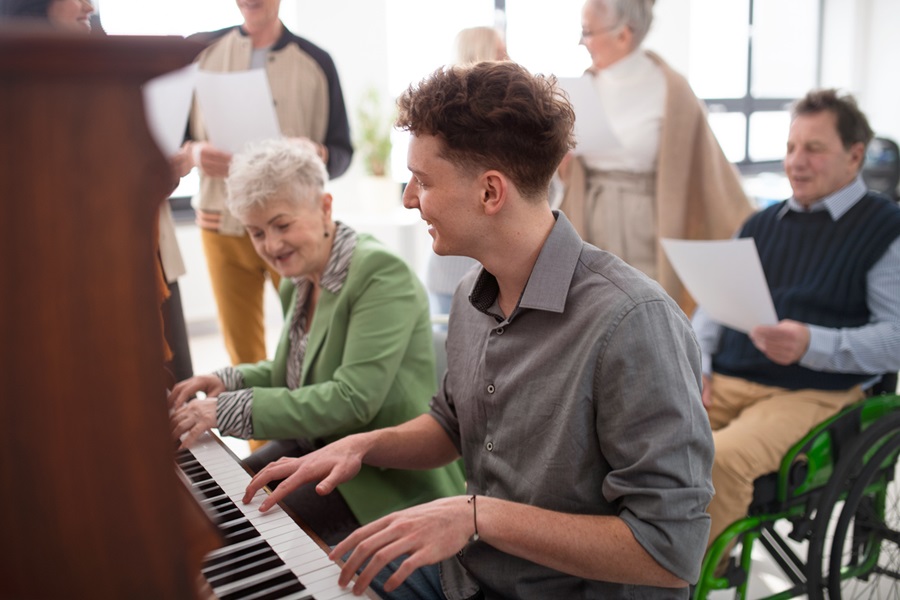
- Encourage social interaction when experienced in groups (such as choirs or music programs)
- Improve mood and overall quality of life
For caregivers and loved ones, shared musical experiences can create moments of connection, even when verbal communication becomes more difficult.
Music in healthcare settings
Music therapy is increasingly being used in healthcare environments to support recovery and comfort.
Evidence suggests that music can:
- Help reduce stress and anxiety during hospital stays
- Support pain management and relaxation
- Enhance emotional well-being for people undergoing treatments such as cancer care
Even simple activities like listening to calming music can make a hospital experience more manageable.
Moving to the rhythm: Music and physical activity
Music can also support physical health by making movement more enjoyable and motivating.
Research has found that music may:
- Improve walking speed and coordination
- Increase motivation to stay active
- Enhance enjoyment of exercise
Whether it’s walking to a steady beat or dancing at home, music can help turn physical activity into something you look forward to.
Simple ways to bring music into your daily life
You don’t need special equipment or training to benefit from music. Here are a few easy ways to get started:
- Create a playlist of your favourite songs from different stages of your life
- Sing along to music you enjoy either alone or in the company of others
- Join a group, such as a choir or community music program
- Listen mindfully, focusing on how the music makes you feel
- Move to music, whether it’s walking, stretching, or dancing
Music offers a simple, accessible, and enjoyable way to support many aspects of healthy aging—from brain health and emotional well-being to social connection and physical activity. Whether you’re listening to a favourite song, singing with others, or moving to a steady beat, even small moments with music can make a meaningful difference.
To learn more about how music can support your health and well-being, explore our resources below.