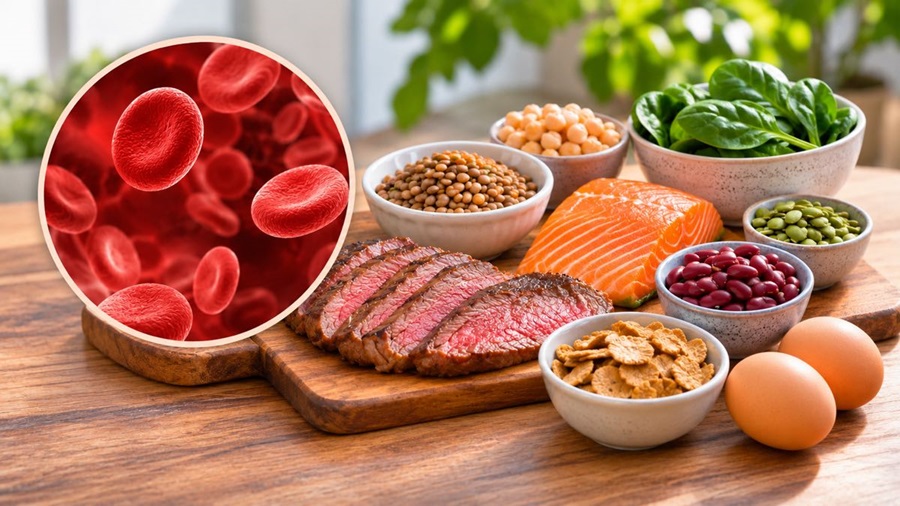

Iron plays an important role in keeping your body healthy. It helps carry oxygen throughout your body, supports brain function and contributes to your energy levels. However, when your body doesn’t have enough iron, it can affect how you feel and function, even before anemia develops. In this video, Dr. Michelle Zeller, a hematologist at McMaster University, explains why iron is important, who is most at risk of iron deficiency, and the symptoms to watch for. She also discusses how iron deficiency is diagnosed and the different treatment options available.
View or download a transcript.
Why is iron important?
Iron is an essential nutrient that helps your body produce hemoglobin, a protein in red blood cells that carries oxygen to your tissues.1 It also supports growth, brain function, and energy production.
When your body doesn’t get enough iron or loses more than it can replace, iron deficiency can develop. Over time, this may progress to iron deficiency anemia, a condition where your body doesn’t produce enough healthy red blood cells.1
Who is at risk of iron deficiency?
Iron deficiency can affect anyone, but some people are at greater risk.2 These include young children, people who menstruate, pregnant individuals and those with limited access to iron-rich foods.
There are four common reasons why iron deficiency develops:2
- Not getting enough iron: Diets that don’t provide sufficient iron can gradually deplete your body’s iron stores.
- Blood loss: Heavy menstrual bleeding, gastrointestinal bleeding and regular blood donation can contribute to iron loss.
- Reduced iron absorption: Certain medical conditions, inflammation and medications, including some antacids, can interfere with how your body absorbs iron.
- Increased iron needs: Growing children, pregnant individuals and endurance athletes may require more iron than usual.
Iron deficiency in older adults
Older adults may be at increased risk of iron deficiency due to inadequate dietary intake, reduced iron absorption or blood loss from the gastrointestinal tract.3,4,5 Certain medications, including blood thinners and anti-inflammatory drugs, can also increase the risk of bleeding.
Symptoms such as fatigue, weakness, reduced exercise tolerance and difficulty concentrating can sometimes be mistaken for normal aging or attributed to other health conditions.
Recognizing the symptoms
Iron deficiency can cause symptoms even before anemia develops. Common signs include fatigue, irritability, difficulty concentrating, headaches and restless legs.1, 2, 6
Because these symptoms can have many causes, it’s important to speak with your healthcare provider if you have concerns. Blood tests can help identify iron deficiency and anemia. Ferritin is commonly used to assess the body’s iron stores, while a complete blood count (CBC) measures hemoglobin levels to determine whether anemia is present.
How can you increase your iron?
Eating iron-rich foods is an important way to maintain healthy iron levels. Both animal and plant-based foods provide iron, and some foods, such as cereals and pasta, are fortified with additional iron.
However, once iron deficiency develops, dietary changes alone may not be enough to restore your body’s iron stores. Your healthcare provider may recommend an oral iron supplement.
For people who cannot tolerate oral supplements, have difficulty absorbing iron or need iron replacement more urgently, intravenous (IV) iron may be recommended. Blood transfusions are generally reserved for people with very severe, symptomatic iron deficiency anemia.
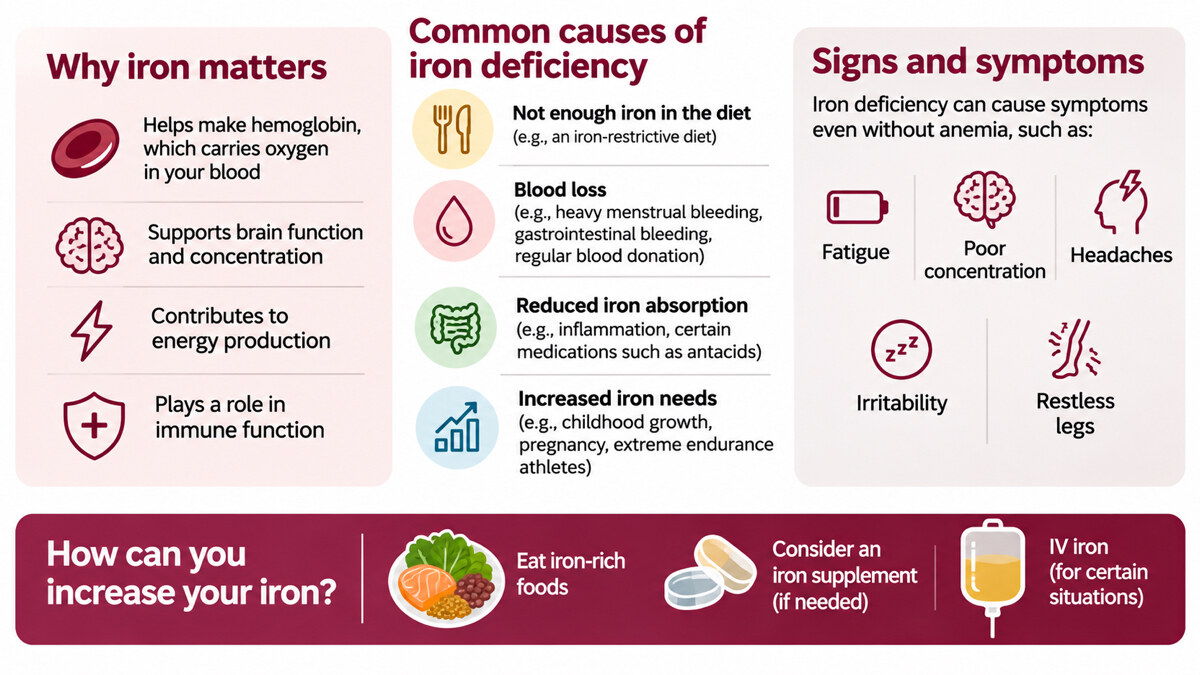
Understanding Iron Deficiency
Why iron matters
- Helps make hemoglobin, which carries oxygen in your blood.
- Supports brain function and concentration.
- Contributes to energy production.
- Plays a role in immune function.
Common causes of iron deficiency
- Not enough iron in the diet: For example, an iron-restrictive diet.
- Blood loss: For example, heavy menstrual bleeding, gastrointestinal bleeding, or regular blood donation.
- Reduced iron absorption: For example, inflammation or certain medications, such as antacids.
- Increased iron needs: For example, childhood growth, pregnancy, or extreme endurance athletics.
Signs and symptoms
Iron deficiency can cause symptoms even without anemia, including:
- Fatigue
- Poor concentration
- Headaches
- Irritability
- Restless legs
How can you increase your iron?
- Eat iron-rich foods.
- Consider an iron supplement, if needed.
- Intravenous (IV) iron may be used in certain situations.
Take home message
Iron is essential for your body’s energy, brain function and overall health. Iron deficiency can develop for several reasons and may cause symptoms even without anemia. Eating iron-rich foods can help maintain healthy levels, but supplements or other treatments may be necessary if deficiency develops.
If you’re experiencing persistent fatigue or other symptoms of iron deficiency, speak with your healthcare provider about whether testing is appropriate. If iron deficiency is identified, determining its underlying cause is an important part of treatment.
Tell us what you think
Give us your feedback on this content by answering a few questions. Your participation will help us improve this resource. Take the survey.