
⏱ 3 min read, 2 min video
This is Part 1 of a two-part series on migraine. In Part 2, you'll learn about safe treatment options and practical strategies to help prevent future migraine attacks.
Migraine is not just a “bad headache”. It is a complex neurological disorder that can be disabling and affect many aspects of daily life. With 1 in 7 Canadians experiencing this chronic condition, if it doesn’t affect you directly, it likely affects someone you know.
Watch this short video to learn what migraine is, how it’s diagnosed, how it can change with age, and when to seek urgent care.
View or download a transcript.
Is it migraine? The "2 out of 3" checklist
Many people are unsure if their headaches are migraine. A simple way to recognize a migraine is the "2 out of 3" rule. If you have at least two of the following, migraine is likely:
- One-sided, pulsating, or throbbing pain that can be moderate to severe
- Nausea or upset stomach
- Sensitivity to light and sound
What can trigger a migraine?
Migraine attacks may be linked to triggers, but these are different for everyone. Many people find that an attack happens when several factors build up over time, rather than from a single cause. The infographic below summarizes six common triggers.
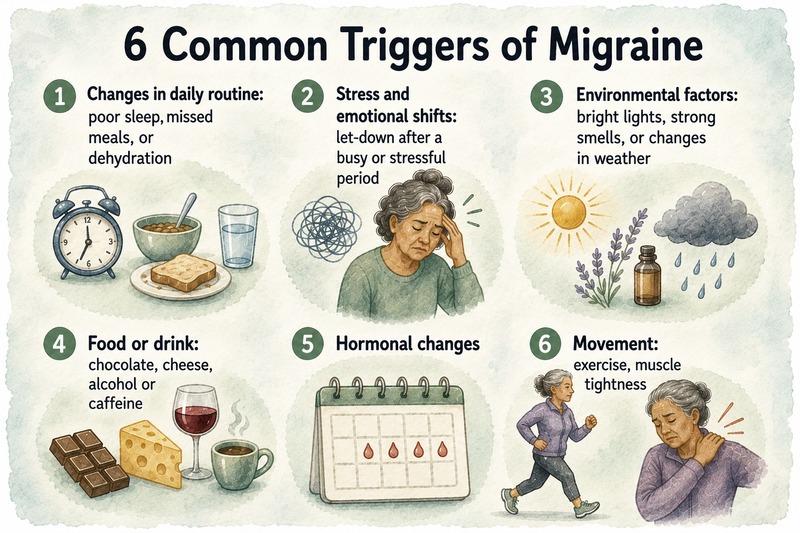
6 Common Triggers of Migraine
Common migraine triggers include:
- Changes in daily routine such as poor sleep, missed meals, or dehydration.
- Stress and emotional shifts, including the let-down feeling after a busy or stressful period.
- Environmental factors such as bright lights, strong smells, or changes in weather.
- Food or drink triggers including chocolate, cheese, alcohol, or caffeine.
- Hormonal changes.
- Movement-related triggers such as exercise or muscle tightness.
Because triggers vary so much, it can help to track your own patterns over time. A simple diary of sleep, meals, stress, and symptoms can help you identify what matters most for you.
For more information about triggers and how to keep a migraine diary, visit the Migraine Canada website.
Understanding the 4 phases of a migraine attack
A migraine is not just a single moment of pain. It is a process that can unfold over hours or even days. Recognizing these phases can help a person identify an attack before the pain starts.
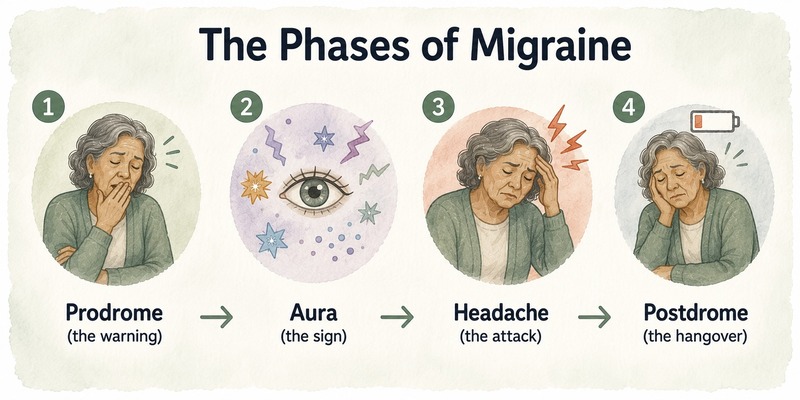
Four Phases of Migraine
This infographic outlines the four phases of migraine.
- Prodrome: The warning phase.
- Aura: The sign.
- Headache: The attack.
- Postdrome: The "hangover".
- Prodrome (the warning): Hours or days before the headache, a person may notice subtle changes such as food cravings, mood changes, or uncontrollable yawning.
- Aura (the sign): This affects about 25% of people and lasts 10 to 60 minutes. This phase resolves on its own. Types of disturbances include:
- Visual: flashing lights or zig-zag lines
- Sensory: tingling or numbness
- Speech/Language: difficulty finding words, slurred speech, or trouble understanding
- Motor: weakness or numbness on one side of the body
- Headache (the attack): This is the pain phase, lasting 4 to 72 hours. It involves intense throbbing and worsens with movement.
- Postdrome (the hangover): After the pain stops, you may feel exhausted, weak, or mentally "foggy" for up to 1 day.
How migraine can look different in older adults
Migraine often changes with age. Although it becomes less common overall in later life, some older adults continue to have migraine attacks. The symptoms may also look different from what is typically seen in younger people.
In older adults:
- Migraine attacks may be less severe, but they can still be frequent and disruptive.
- Head pain is more likely to occur on both sides of the head rather than on one side.
- Symptoms such as nausea, vomiting, and sensitivity to light and sound may be less noticeable.
- Aura may become more prominent, sometimes occurring with little or no headache.
Because migraine symptoms can resemble other medical conditions, they may be harder to recognize in older adults. A new headache, a new aura, or a major change in a long-standing headache pattern after age 50 should always be assessed carefully, as other causes may need to be ruled out.
When to seek care
While migraine symptoms can change with age, some headache symptoms should not be ignored. Certain warning signs may point to a more serious underlying condition and may require urgent medical attention.
The simplified "SNOOP" checklist can help identify these red flags:
- S - Systemic Symptoms: Fever, stiff neck, or unexplained weight loss.
- N - Neurological Signs: Confusion, seizures, or changes in speech or alertness.
- O - Onset is Sudden: "Thunderclap" pain that peaks within 1 minute.
- O - Older Age: Any new headache starting for the first time after age 50.
- P - Pattern Change: A significant change in usual headache pattern or a headache triggered by physical activity, coughing, or straining.
The infographic below expands on these warning signs and highlights important clues from your medical history, physical symptoms, brain and vision changes, and changes in headache pattern that should prompt urgent assessment.13
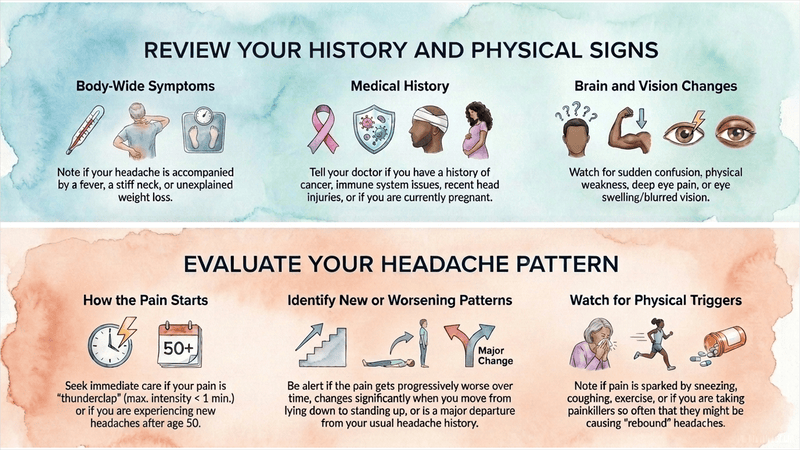
Headache Red Flags
This infographic outlines warning signs that may require urgent medical care for a headache.
- Body-wide symptoms: Seek care if a headache is accompanied by fever, stiff neck, or unexplained weight loss.
- Medical history: Tell your doctor if you have a history of cancer, immune system problems, recent head injury, or pregnancy.
- Brain and vision changes: Watch for sudden confusion, physical weakness, deep eye pain, eye swelling, or blurred vision.
- How the pain starts: Seek immediate care for thunderclap pain that reaches maximum intensity in less than one minute, or for new headaches after age 50.
- New or worsening patterns: Be alert if pain gets progressively worse, changes significantly when moving from lying down to standing up, or is a major departure from your usual headache history.
- Physical triggers: Note if pain is triggered by sneezing, coughing, exercise, or if you are taking painkillers so often that they might be causing rebound headaches.
If you’ve been diagnosed with migraine, the next step is learning how to manage it safely and reduce attacks. In Part 2 of this series, we will cover treatment options and daily strategies to help manage and prevent migraines.
Tell us what you think
Give us your feedback on this content by answering a few questions. Your participation will help us improve this resource. Take the survey.
_jpg.jpg?sfvrsn=bcb0dd6_2)