

⏱ 3 min read, 2 min video
While there is no cure, migraine can often be managed with the right combination of treatment and consistent daily habits. Watch this short video to learn what you can do to manage and prevent attacks with the help of medication and lifestyle changes.
If you’re not sure whether your symptoms are migraine, start with Part 1 of this series on recognizing migraine and when to seek care.
View or download a transcript.
Treatment and medication safety
For acute relief, simple pain relievers such as ibuprofen or acetaminophen and prescription triptans or gepants are effective first-line treatments. Anti-nausea medications, such as metoclopramide, can help the body absorb pain medication better and also help with associated nausea.
Treatment choices can be more complex in older adults because of other health conditions, medication interactions, and age-related changes in how the body processes drugs. For some, simple pain relievers and nonsteroidal anti-inflammatory medicines (NSAIDs) can pose greater risks, and triptans are generally used more cautiously in people with cardiovascular disease or vascular risk factors. Gepant medications, such as ubrogepant or rimegepant, which have recently become available in Canada, have fewer cardiovascular side effects; therefore, they may be considered in older adults with contraindications to triptans. Treatment decisions often need to be individualized.
Other medications, such as opioids, sedatives, or sleeping pills, should generally be avoided because they can increase the risk of confusion, falls, and dependence.
Download Choosing Wisely Canada’s guide Treating Migraine Headaches: Some drugs should rarely be used to learn more about safe options for acute treatment of migraines.
Avoiding medication overuse headaches
While medications can help, taking pain medication too often can cause a cycle of "rebound pain" known as a medication overuse headache. The medicine gives relief, then wears off, and the headache returns worse than before.
To avoid this, follow the 10-15 Day Rule:
- Limit triptans (like Imitrex®) or combination pills (like Tylenol-3® or Fiorinal®) to fewer than 10 days per month
- Limit simple pain relievers (like ibuprofen or acetaminophen) to fewer than 15 days per month
If you find yourself needing medication more often, speak with your healthcare provider about other options.
Prevention: small daily habits matter
Just as important as treating migraine is finding ways to prevent it. Many people find that keeping consistent daily routines helps to "calm" the brain.
One helpful way to think about prevention is the SEEDS approach, outlined in the infographic below. Even small, steady changes in these areas can reduce how often migraine occurs.
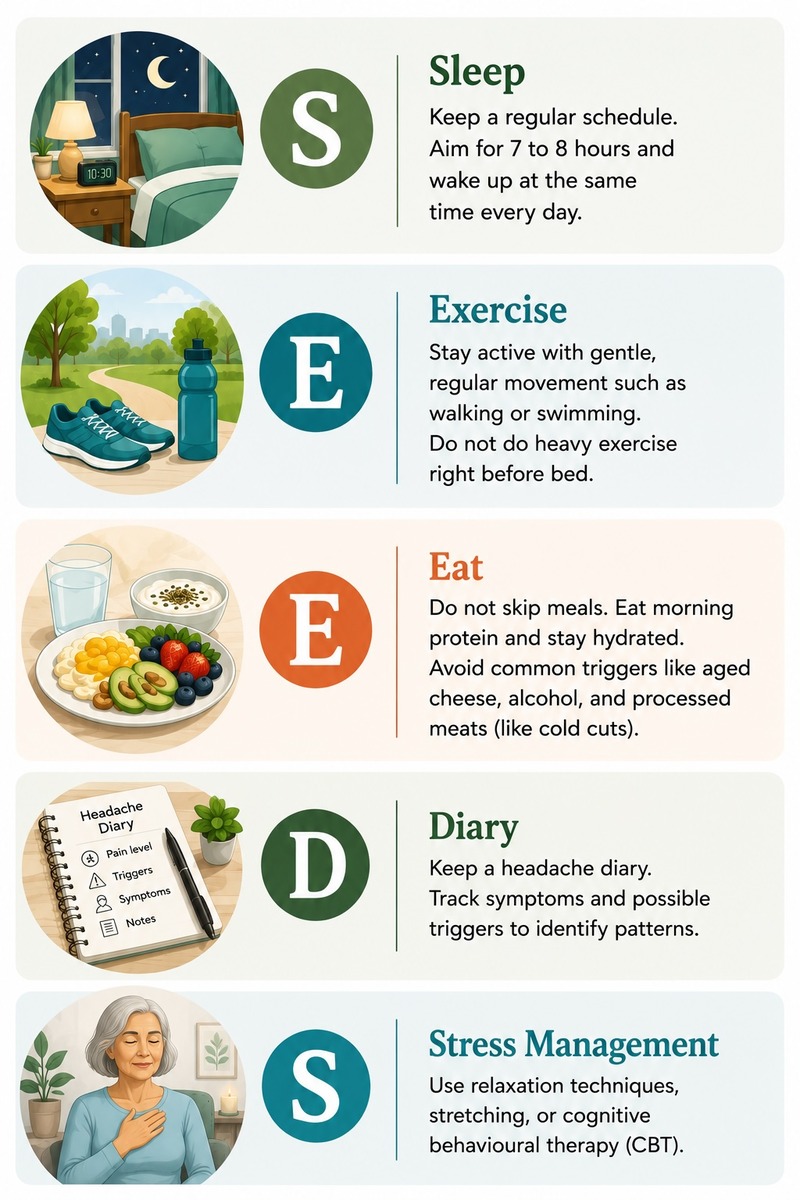
- Sleep: Keep a regular sleep schedule. Aim for 7 to 8 hours of sleep and wake up at the same time every day.
- Exercise: Stay active with gentle, regular movement such as walking or swimming. Avoid heavy exercise right before bed.
- Eat: Do not skip meals. Eat morning protein and stay hydrated. Avoid common migraine triggers such as aged cheese, alcohol, and processed meats like cold cuts.
- Diary: Keep a headache diary. Track symptoms and possible triggers to help identify patterns.
- Stress Management: Use relaxation techniques, stretching, or cognitive behavioural therapy (CBT) to help manage stress.
Natural prevention: supplements
Some supplements may help prevent migraine, although the evidence is still evolving. The Canadian Headache Society recommends magnesium citrate, riboflavin (vitamin B2), and coenzyme Q10 as options that may be considered.
Before starting any supplement, it is important to speak with your healthcare provider or pharmacist to make sure it is safe and appropriate for you.
Other prevention strategies
If lifestyle changes and supplements are not enough, additional treatment options may be considered. These include certain blood pressure medications, antidepressants, anti-seizure medications, and newer treatments that target migraine pathways in the brain. These include calcitonin gene-related peptide (CGRP) monoclonal antibodies and CGRP receptor antagonists (gepants) such as atogepant.
For people with chronic migraine, treatments such as onabotulinum toxin A (Botox®) injections may also be used.
Some therapies, such as acupuncture or cannabis-based products, do not currently have strong evidence for migraine prevention or may carry risks. It is important to discuss these options with your healthcare provider before trying them.
For more detailed information about these approaches, visit Migraine Canada.
What you can do
Living with migraine can feel unpredictable, but there are steps you can take to feel more in control.
You may find it helpful to:
- Keep track of your symptoms and possible triggers
- Learn about safe and effective treatment options
- Work with your healthcare provider to develop a personalized plan
Download Choosing Wisely Canada's Treating Migraine Headaches guide to learn more about safe treatments.
Visit Migraine Canada for more information on headache diaries.
Tell us what you think
Give us your feedback on this content by answering a few questions. Your participation will help us improve this resource. Take the survey.
_jpg.jpg?sfvrsn=bcb0dd6_2)