

⏱ 2 min read, 3 min video
Do your muscles and joints sometimes feel stiff or achy after sitting for too long or doing more activity than usual? Small changes to how you move throughout the day may help you prevent and manage these common discomforts.
In this video, Dr. Lisa Carlesso, a physiotherapist and Associate Professor in the School of Rehabilitation Science at McMaster University, shares practical approaches to keeping your body moving comfortably. She explains why taking movement breaks, warming up before activity, and choosing gentle movement when you are sore can make a difference.
View or download a transcript.
Break up long periods of sitting
Stiffness and aches can sometimes develop when we stay in one position for too long. Break up long stretches of sitting with short bursts of movement.1 You don’t need a full workout: a minute or two of walking around or changing positions gives your postural muscles a break. Making these movement breaks a regular habit can help prevent strain from building up.
Warm up before getting active
Doing more activity than usual, or moving in unfamiliar ways, can also leave you feeling sore. Before heading out for a brisk walk or getting started in the garden, ease into the activity with a warm-up.2 Try several minutes of easy-paced walking before running, or gentle movements of your neck, shoulders, legs, and back before gardening. Starting at a lower intensity helps prepare your muscles and joints for greater effort.
Choose gentle movement when you are sore
When your muscles are sore, choose gentle movement and adjust your activity to what feels manageable. That might mean reducing the intensity or trying a different activity, such as taking a walk after a day of gardening. Some discomfort after activity does not necessarily mean you have caused damage. However, pushing through pain can prolong discomfort and may increase your risk of injury if your muscles have not had time to recover.
Gentle stretching may also help you feel less stiff. Aim for a gentle sensation rather than forcing the stretch, which can cause the muscle to tighten more. Hold the stretch for up to one minute and repeat it a couple of times.
Your body is strong, resilient, and designed to adapt. Regular movement, gradually easing into more demanding activities, and gentler activity when you are sore are simple ways to help you keep moving over the long term.
Take home message
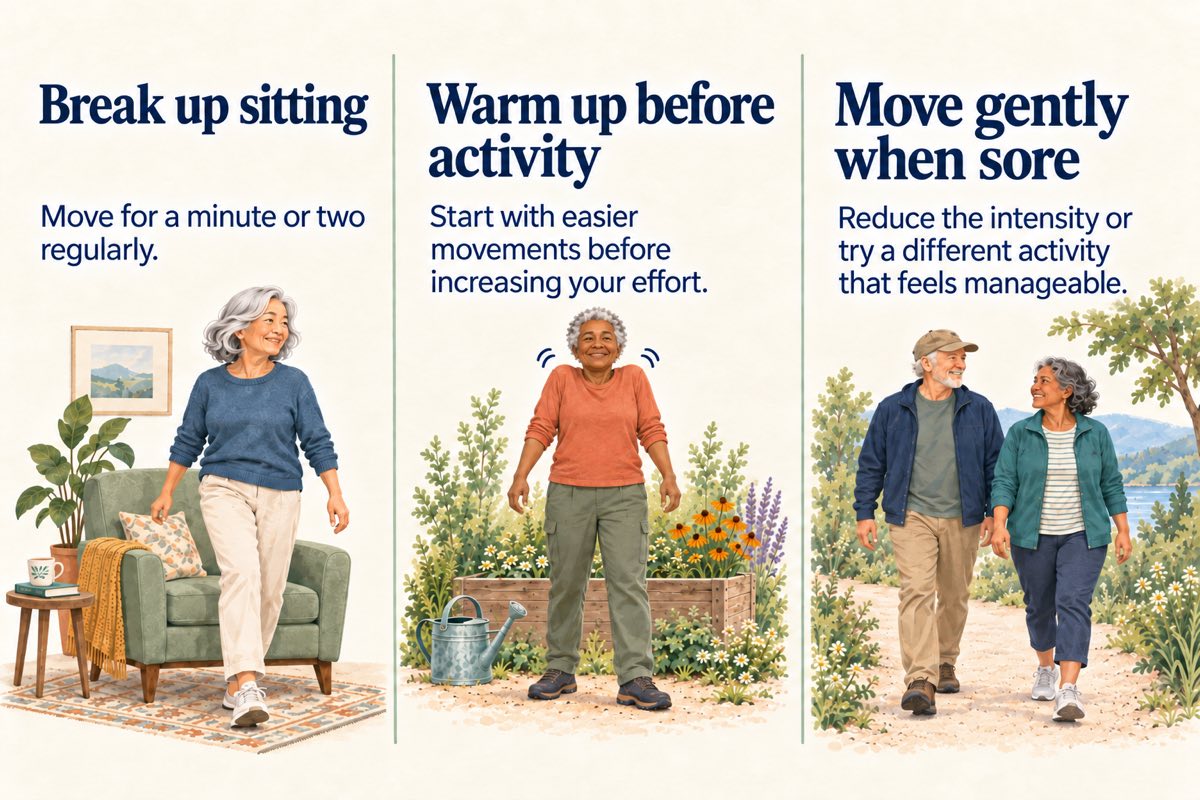
Break up sitting. Move for a minute or two regularly.
Warm up before activity. Start with easier movements before increasing your effort.
Move gently when sore. Reduce the intensity or try a different activity that feels manageable.
If pain is severe, persistent or getting worse, consider speaking with your healthcare provider.
Tell us what you think
Give us your feedback on this content by answering a few questions. Your participation will help us improve this resource. Take the survey
_jpg.jpg?sfvrsn=bcb0dd6_2)