
The global population is aging. Older adults aged 60 years and over will account for one in five people by 2050. As we enter later life, we’re exposed to various factors that can negatively shape our mental health. These include difficulty dealing with retirement, grief from the loss of loved ones, decreased mobility, loneliness, social isolation, and discrimination based on age (1).
Depression is a leading cause of illness and disability across the world, and one of the most common mental health disorders affecting older adults (1-3). Globally, it's estimated that about one third of older adults experience depressive symptoms, this includes those that don't meet the criteria for a clinical diagnosis of depression (4). Medications such as anti-depressants and psychological therapies that aim to change unhelpful patterns of thinking, feeling, and behaving are often top of mind when we think about treatments for depression and depressive symptoms, and research has shown that they can work (3;5). But what about complementary strategies that can be added to a treatment plan? In the past, we’ve talked about the benefits of exercise, practicing mindfulness, and sharing memories (6-10). Today, let’s turn our focus to strategies that allow older adults to interact with their peers, express their emotions, and stimulate their minds. That’s right, art-based programs!
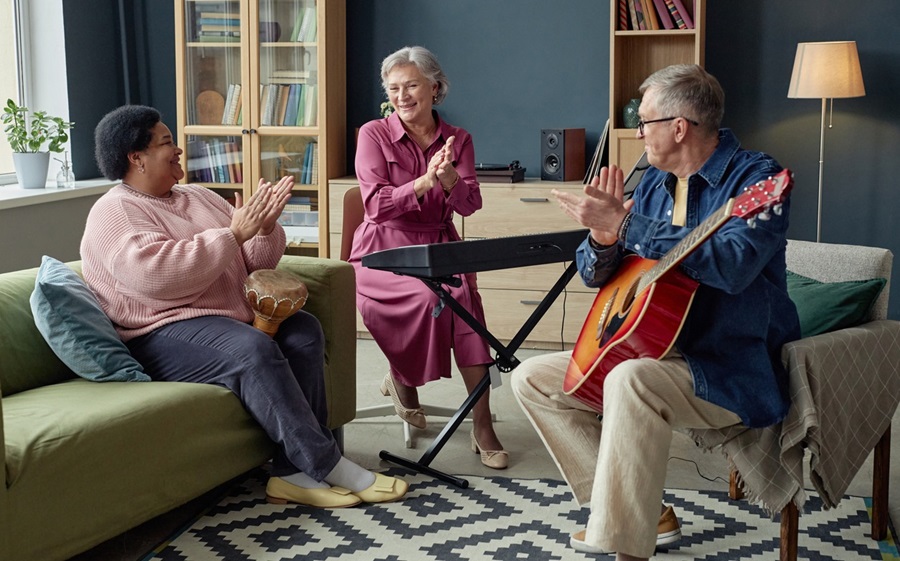
To help shed light on the effectiveness of art-based programs for tackling depressive symptoms later in life, let’s dive deeper into a recent systematic review. The review focused on group art-based programs related to music, dance, visual arts, drama, creative writing, and storytelling. Some programs involved actively creating or performing art like dancing, singing or painting (aka an active approach), while others focused on receiving or observing art like watching a performance or listening to music (aka a receptive approach).
What the research tells us
The results are encouraging! Overall, the review found that group art-based programs may meaningfully reduce depressive symptoms in older adults compared to usual care and other active non-art-based activities. Benefits can be seen for older adults in the community, care home, and hospital settings, although the effects appear strongest in the last two settings.
If you’re interested in what program characteristics to look for, the review is able to offer some preliminary insights. For instance, most of the evidence came from music, dance, and visual art programs, so we can better comment on these program types. While all three appear to be effective, music programs may have the largest reductions in depressive symptoms. Similarly, both programs that use active or receptive approaches are associated with positive outcomes, however participants receiving or observing art may see greater benefits. The researchers suggest this finding may be because passive activities require less physical and cognitive exertion, making them easier for older adults to engage in. But this finding should be interpreted cautiously, as fewer studies within the review examined receptive approaches. More high-quality research is needed to further support these findings and provide guidance on optimal program types and features (5).
Reach out to your healthcare team to discuss what you're feeling and experiencing, as well as potential treatment options, including complementary strategies like art-based programs, or referrals to supports within your community or long-term care setting that address your specific needs.
Remember:
- If you're experiencing a crisis and need immediate medical assistance, call 9-1-1.
- The Government of Canada offers links to mental health supports across the country.
- Need help finding art-based programs in your community? Try local municipal recreation portals, seniors’ centres, community health centres, public libraries, provincial art foundations, boards, and councils, and directories (e.g., International Centre of Art for Social Change).
Tell us what you think
Give us your feedback on this content by answering a few questions. Your participation will help us improve this resource. Take the survey.