
⏱ 4 min read, 4 min video
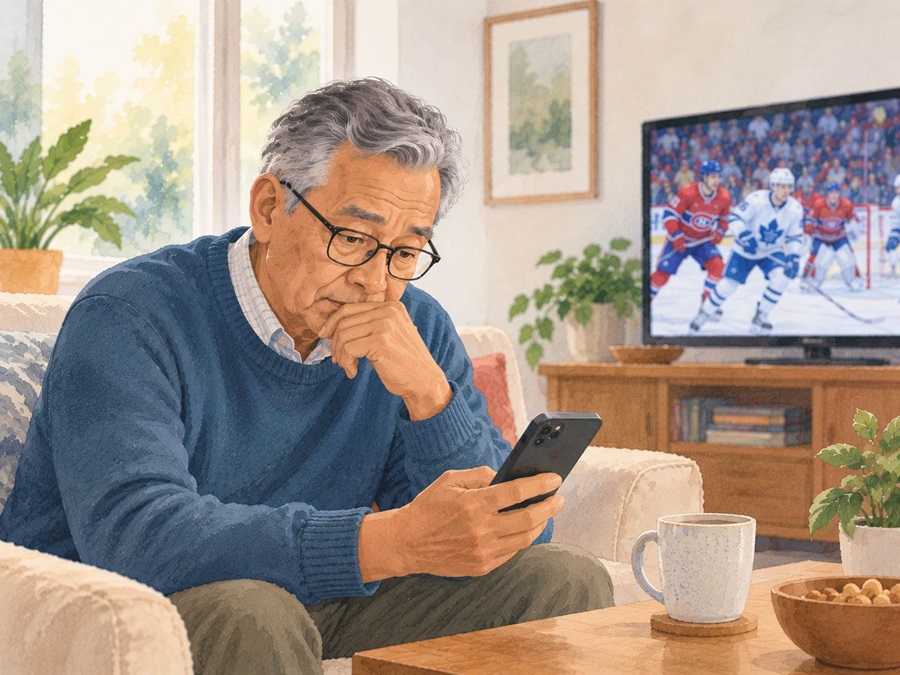
Online gambling can affect older adults in unique ways. As technology brings sports betting and virtual casino games directly into our homes 24/7, financial and emotional risks can escalate quickly; especially for those living on fixed incomes or experiencing social isolation. In this short video, McMaster University researcher Dr. Iris Balodis explains how modern online gambling products are engineered, how they tap into the brain's reward system, and why problem gambling is a serious public health concern. Read on to learn how these risks specifically impact older adults, key warning signs to watch for, and evidence-based strategies for support and recovery.
View or download a transcript.
When does gambling become a problem?
Gambling can become problematic when it begins to cause financial, emotional, relationship, or other harms. The terms ‘problem gambling’ or ‘disordered gambling’ often refer to a continuum of problems caused by gambling. More severe and persistent problems may meet the criteria for gambling disorder, a recognized behavioural addiction. Warning signs include difficulty controlling gambling, unsuccessful attempts to cut back, and continuing to gamble despite negative consequences.
Why online gambling is increasing among seniors
Gambling is a widespread pastime across Canada, with at least 65% of adults participating in some form of betting. However, the shift toward mobile technology and digital platforms – including high-risk speculative trading such as cryptocurrency – has fundamentally altered how individuals interact with betting markets. Rather than travelling to a physical venue, older adults can now place bets from a smartphone or tablet at any hour.1,2,12,13
During major sporting events like the Super Bowl, billions of dollars may be wagered over a short period. Micro-betting, where viewers bet on small live events, such as the colour of a coach's hat, blurs the boundary between casual entertainment and continuous financial risk. While commercial advertisements portray gambling as a joyous, social activity where winning is expected, the reality for those struggling with problem gambling is often marked by intense shame, fear, and profound isolation.
What makes older adults vulnerable?
- Fixed Incomes & Financial Strain: Unlike younger adults who can re-enter the workforce, seniors living on fixed retirement savings or pensions cannot easily replace lost funds.2,3,11
- Social Isolation & Coping Mechanism: Retirement, reduced mobility, or being unpartnered (single, widowed, or divorced) can lead to loneliness. Gambling is frequently used as an unhealthy coping strategy for emotional stress or boredom. 2,3,11,12
- Cognitive & Brain Changes: Natural age-related cognitive changes can affect decision-making. Furthermore, gambling products trigger the brain's dopamine reward circuitry through visual celebrations during "losses disguised as wins" (where a player wins back less than their original wager) and "near misses". 4,11,12
- Co-occurring Health Challenges: Disordered gambling in older adults frequently correlates with increased sedentary behaviour, physical health issues, and heightened rates of anxiety or depression. Alarmingly, a substantial proportion of individuals experiencing gambling problems report suicidal ideation (approximately 32% lifetime prevalence in one meta-analysis). 2,5,12
Warning signs: What to look for
Problem gambling often goes unnoticed until severe harm occurs. Family members, friends, and caregivers should watch for key warning signs:11
- Financial Indicators: Sudden cashing-in of retirement savings or insurance policies, inability to pay routine bills, or alternating between being broke and displaying large amounts of cash.
- Behavioural Changes: Withdrawing from long-standing hobbies, missing family gatherings, altered sleep schedules, or uncharacteristic conflicts over money.
- Emotional Signs: Unexplained anxiety, mood swings, sudden anger, or increasing social withdrawal.
- Physical Health Complaints: Stress-related symptoms such as chronic headaches, gastrointestinal trouble, or sleep disturbances.
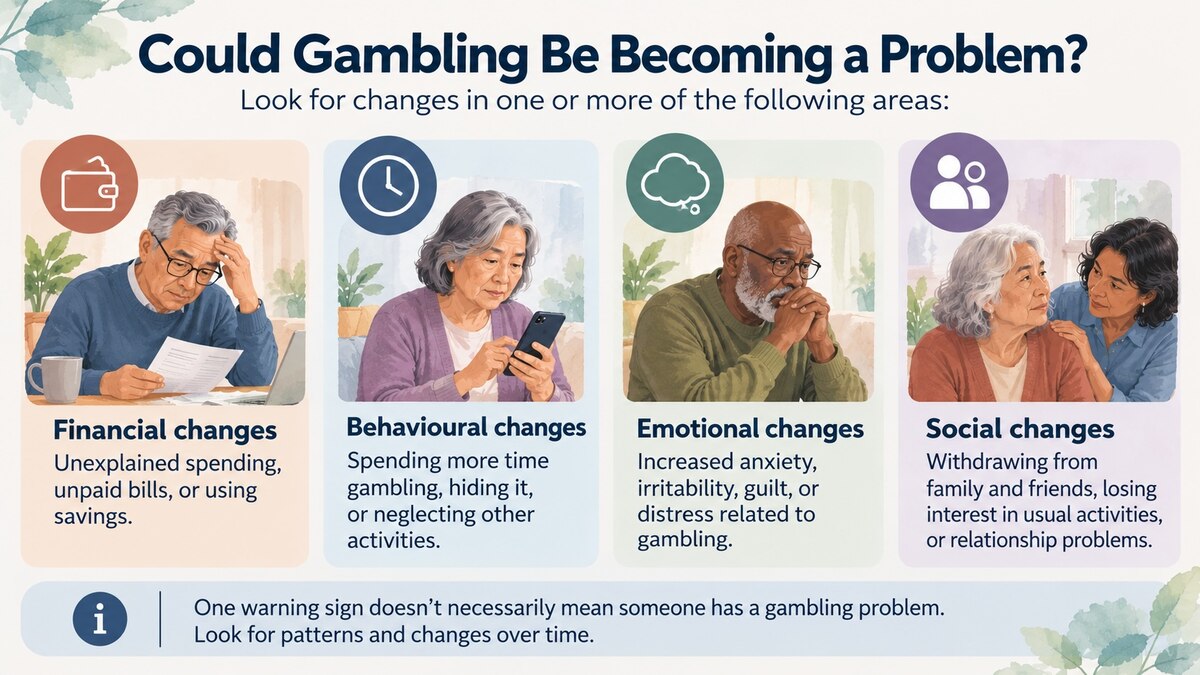
Could Gambling Be Becoming a Problem?
Look for changes in one or more of the following areas:
- Financial changes: Unexplained spending, unpaid bills, or using savings.
- Behavioural changes: Spending more time gambling, hiding it, or neglecting other activities.
- Emotional changes: Increased anxiety, irritability, guilt, or distress related to gambling.
- Social changes: Withdrawing from family and friends, losing interest in usual activities, or relationship problems.
One warning sign doesn’t necessarily mean someone has a gambling problem. Look for patterns and changes over time.
Evidence-based prevention and recovery
Research syntheses outline clear, evidence-based strategies to address problem gambling or gambling disorder in older adults:
- Routine Screening: Health professionals and social services should routinely screen older adults for gambling concerns alongside routine mental health checks.3,11
- Brief Interventions & Personalized Feedback: Studies suggest that 1- to 3-session brief counselling interventions – especially those incorporating personalized feedback, risk education, and motivational interviewing – may be a useful way to help individuals reduce gambling time and spending.7,8
- Cognitive Behavioural Therapy (CBT): CBT is among the best-supported psychological treatments for disordered gambling, helping individuals reframe thoughts around chance and control.6
- Caution with Medications: Clinical reviews indicate that while certain medications (like opioid antagonists) may offer modest short-term relief, antidepressants show no significant benefit over placebos for gambling disorder.9
- Population-Level Policy & Community Support: Implementing regulatory safeguards such as mandatory session limits, pop-up spending reminders, low bet limits, and on-screen cash clocks may help reduce harm at the population level. Involving family members in the circle of care and connecting seniors with alternative social activities addresses the root isolation driving the behaviour.10,11
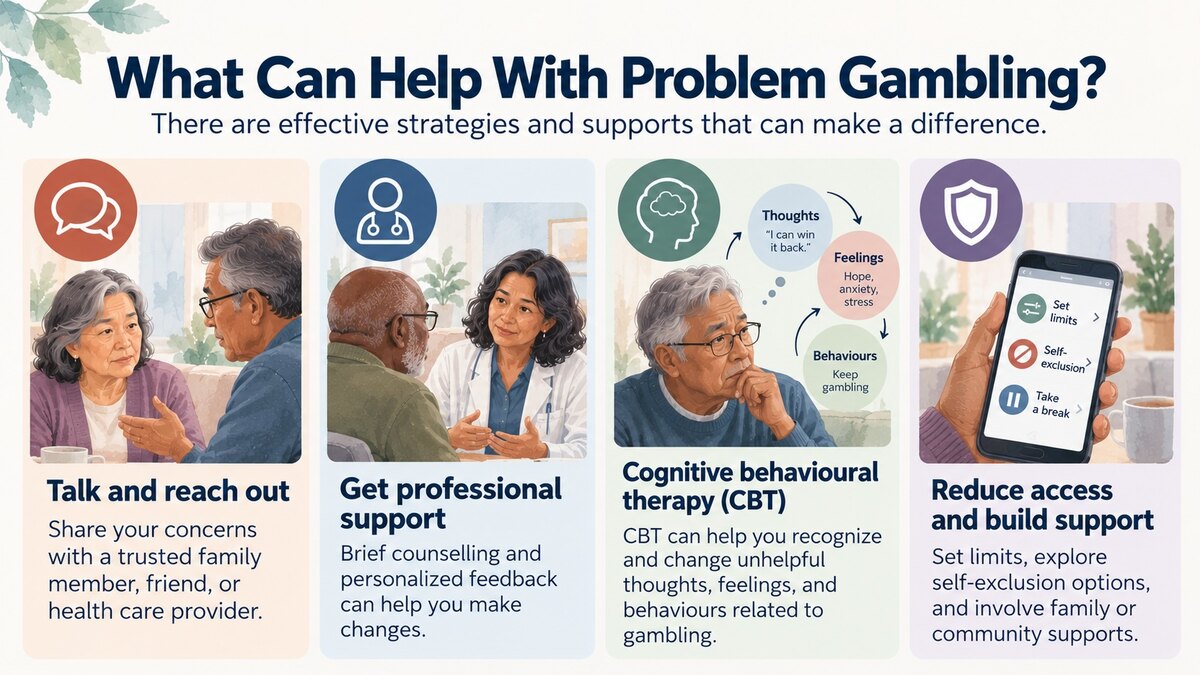
What Can Help With Problem Gambling?
There are effective strategies and supports that can make a difference.
- Talk and reach out: Share your concerns with a trusted family member, friend, or health care provider.
- Get professional support: Brief counselling and personalized feedback can help you make changes.
- Cognitive behavioural therapy (CBT): CBT can help you recognize and change unhelpful thoughts, feelings, and behaviours related to gambling. An accompanying diagram shows a cycle connecting thoughts, such as “I can win it back”; feelings, such as hope, anxiety, and stress; and behaviours, such as continuing to gamble.
- Reduce access and build support: Set limits, explore self-exclusion options, and involve family or community supports. A phone illustration shows the options “Set limits,” “Self-exclusion,” and “Take a break.”
The bottom line
- A widespread activity with hidden risks: While approximately 65% of Canadians engage in some form of gambling, mobile technology brings sports betting and virtual casino games directly into the home 24/7.1
- Prevalence in older populations: Approximately 1.5% of individuals nationwide experience problem gambling, with slightly higher proportions among older adults.1
- Unique vulnerabilities: Social isolation, life transitions (such as retirement or loss of a partner), and managing fixed incomes make older adults particularly vulnerable to severe financial and emotional harm.1-3
- Psychological traps: Gambling products feature mechanics like "near misses" and "losses disguised as wins" that can influence reward processing.4
- Proven support is available: Brief counselling interventions, personalized feedback, Cognitive Behavioural Therapy (CBT), and family-supported care offer effective pathways to recovery.3,6-11
Featured resources and next steps
- Need Support? Contact your local provincial/territorial helpline or call 211 to connect with local addiction services and community support programs.
- If you are located in Ontario, ConnexOntario can help you discover mental health, addiction, and program gambling services. Visit their website, call 1-866-531-2600 or text CONNEX to 247247. There is also a new service in the province called BetGuard, which enables you to opt out of all regulated online gambling in Ontario.
- Gamblers Anonymous: Community groups to help people who think they might have a gambling problem. Find local, telephone, or virtual meetings in your community. Gam-Anon provides assistance and comfort to those affected by someone else’s gambling problem.
- Additional Gambling Help Websites and Apps: Access a range of other websites and resources provided by the Centre for Addiction and Mental Health (CAMH).
Tell us what you think
Give us your feedback on this content by answering a few questions. Your participation will help us improve this resource. Take the survey.