

⏱ 4 min read, 2 min video
Mental health is an essential part of healthy aging, yet many men find it difficult to recognize when they’re struggling or to ask for help when they do.
Let’s start by meeting Jorge. He has retired after decades of work and is now caring for his spouse, who has serious health problems. Many friends have moved or passed away. He doesn't feel exactly sad, but he's more irritable, sleeping poorly, and has stopped doing the things he used to enjoy. Jorge is not himself.
Many men assume these changes are simply part of getting older or dealing with life’s challenges. Sometimes they are. But sometimes they’re signs that your mental health needs attention.
View or download a transcript.
Looking beyond the obvious signs
Depression and other mental health conditions don’t always look the way we expect. Many people picture someone with depression as being persistently sad or unable to get out of bed. While those experiences are common, they don’t reflect everyone’s experience, particularly among men.
Some men may become increasingly irritable, impatient, or short-tempered. Others immerse themselves in work, withdraw from family and friends, lose interest in hobbies, or begin relying more heavily on alcohol or other substances to cope. Thoughts of death or suicide are more frequent, especially in older men. The infographic below summarizes some typical signs of depression along with those that are often seen in men.
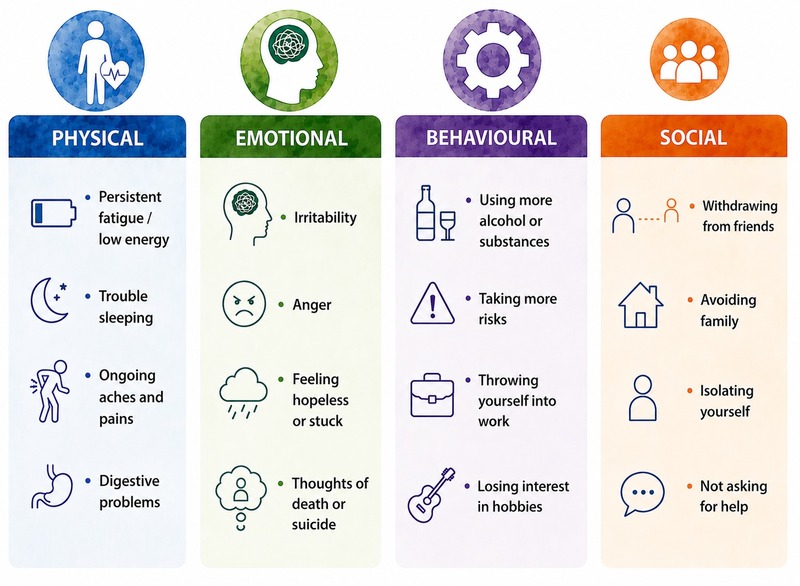
Common Signs of Depression in Men
This infographic describes common signs of depression in men, grouped into four categories: physical, emotional, behavioural, and social. Not everyone experiences the same signs, and symptoms may vary from person to person.
Physical Signs
- Persistent fatigue or low energy
- Trouble sleeping
- Ongoing aches and pains
- Digestive problems
Emotional Signs
- Irritability
- Anger
- Feeling hopeless or stuck
- Thoughts of death or suicide
Behavioural Signs
- Using more alcohol or substances
- Taking more risks
- Throwing yourself into work
- Losing interest in hobbies
Social Signs
- Withdrawing from friends
- Avoiding family
- Isolating yourself
- Not asking for help
For older adults, these changes can be especially easy to overlook. Fatigue, reduced energy, changes in sleep, or physical aches are sometimes assumed to be a normal part of aging or simply the result of chronic medical conditions. While physical health conditions certainly deserve attention, persistent emotional or behavioural changes may also signal that mental health support is needed.
Recognizing these changes early can make it easier to seek support before they begin affecting a person's relationships, work, or overall health.
Why do many men not seek help?
Many men grow up with messages that encourage them to be stoic, independent, and self-reliant. While these qualities can be strengths, they may also make it harder to acknowledge when additional support is needed.
Some men worry that talking about their mental health will make them appear weak or become a burden to others. Others simply find it difficult to put their emotions into words or recognize what they’re feeling.
Research suggests that these beliefs can delay help-seeking, even as symptoms become more severe. Yet mental health conditions are health conditions, not personal failures. Seeking help early is no different than seeking care for high blood pressure, arthritis, or diabetes.
Life transitions that can affect mental health
For older adults, some common life changes can increase the risk for depression. These include:
- Retirement
- Children moving away
- Persistent sleep difficulties
- Spouse or close friends passing away
- Social isolation
- Significant physical concerns or recent onset of anxiety
- Loss of hearing or vision
- Complaints of memory issues
- Serious neurological illnesses, like dementia, Parkinson disease or stroke
- Recurrent or prolonged hospitalization
- Mobility issues
- Loss of independence, such as difficulty getting around, caring for oneself, or losing driving privileges; or
- A move from home, such as to a retirement or long-term care home
Small daily habits can make a difference
No single strategy can prevent or treat every mental health condition, but healthy daily habits, as outlined in the infographic below, can play an important role in supporting emotional well-being alongside professional care when needed.
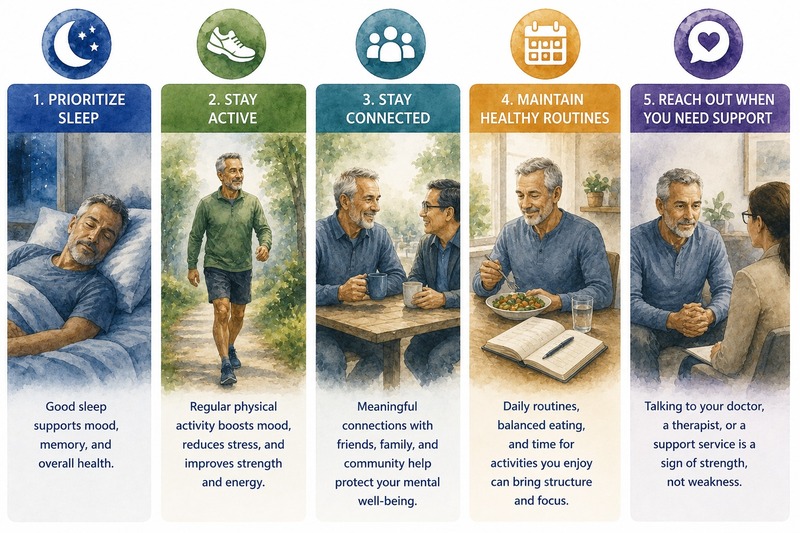
5 Ways to Support Men's Mental Health
This infographic highlights five practical strategies that can help support men's mental health and overall well-being. Small, consistent habits can improve mood, resilience, and quality of life.
- Prioritize sleep. Good sleep supports mood, memory, and overall health.
- Stay active. Regular physical activity boosts mood, reduces stress, and improves strength and energy.
- Stay connected. Meaningful connections with friends, family, and community help protect your mental well-being.
- Maintain healthy routines. Daily routines, balanced eating, and making time for activities you enjoy can bring structure and focus.
- Reach out when you need support. Talking to your doctor, a therapist, or a support service is a sign of strength, not weakness.
Prioritize sleep
Sleep and mental health are closely connected. Poor sleep can worsen mood, while depression and anxiety can make it harder to get a good night’s rest. Keeping a consistent sleep schedule and practicing healthy sleep habits can benefit both body and mind. For those experiencing insomnia, Cognitive Behavioural Therapy for Insomnia, or CBT-I, is an effective treatment approach recommended by experts.
Stay physically active
Regular physical activity is one of the most consistently supported lifestyle strategies for improving mood and reducing symptoms of depression and anxiety. It also helps maintain strength, balance, cardiovascular health, sleep quality, and independence as we age.
You don’t need to train for a marathon. Walking, gardening, swimming, cycling, strength training, or any activity you enjoy can all contribute to better mental and physical health.
Stay socially connected
Maintaining meaningful social connections becomes increasingly important as we age. Spending time with family or friends, volunteering, joining a Men’s Shed, participating in community programs or faith communities, taking a course, or joining a recreational sports league or walking group can all help reduce loneliness and improve well-being.
Reduce alcohol and substance use
Although alcohol may seem to provide temporary relief from stress, it often worsens mood, anxiety, and sleep over time. Reducing alcohol or substance use can improve both mental and physical health.
Supporting the men in your life
Whether it’s a partner, brother, father, friend, or neighbour, you don’t need to be a mental health expert to make a difference. If you’re concerned about someone, choose a quiet time to ask how they’re doing. Listen without judgment and resist the urge to solve the problem immediately. Sometimes simply being heard is the most important first step.
If concerns continue, encourage the person to speak with their family doctor or another mental health professional. There are many effective non-medication and medication approaches to treating depression.
Why mental health matters as we age
Good mental health helps us stay engaged with the people and activities that give life meaning. It also influences how we manage chronic health conditions, recover from illness, maintain our independence, and enjoy a good quality of life.
Just as we pay attention to blood pressure, cholesterol, bone health, or mobility, caring for our mental health should be part of healthy aging. Looking after emotional well-being isn’t separate from physical health; it is an essential part of it.
Want to learn more?
Tell us what you think
Give us your feedback on this content by answering a few questions. Your participation will help us improve this resource. Take the survey.
Important disclaimer
This content discusses symptoms of depression, including suicidal thoughts. If you or someone you know is in need of services or support, help is available at any time through Canada’s Suicide Crisis Helpline. Call or text 9-8-8 or visit their website at 988.ca for more information. Learn more about mental health supports at Canada.ca. If this is an emergency, you can also call 9-1-1 or go to your closest emergency department.
_jpg.jpg?sfvrsn=bcb0dd6_2)