Topic
Blog Posts: Information technology
-
Can remote pharmacist support help with medication management?
Research investigates whether remote pharmacist support can make medication management easier for people living with chronic diseases.Full story -
Care robots: Useful support, but not a replacement for human care
Care robots may offer useful physical assistance with selected activities, but evidence for these and other benefits remains limited. Technology should only be introduced when it addresses an identified need, is easy to use, respects the older adult’s preferences and privacy, and does not serve as a substitute to human care.Full story -
3 potential health benefits of playing video games
Getting our “game” on for better health? Research highlights some of the potential physical and cognitive benefits of playing certain video games.Full story -
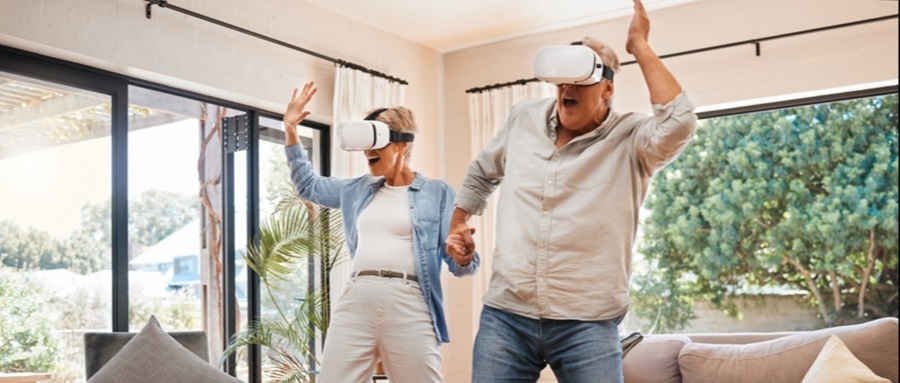
Video games and aging: Are there real benefits?
Can virtual reality games do more than entertain? New research explores their potential to support our cognition as we age.Full story -
Get down with digital: 3 ways digital technologies can enhance health
What does the research say about the intersection of digital technology and health?Full story -
Getting active with dance-based video games
Put on your dancing shoes? The combination of dancing and video games may improve some aspects of physical function.Full story -
The future is now! Can chatbots help us make healthy lifestyle changes?
Chatbots have entered the “chat”! Research delves into the use of chatbots as a way to help modify lifestyle behaviours.Full story -
A voice assistant at your service
Personal voice assistants like Apple's Siri, Amazon's Alexa or Google's Assistant are promising to enhance the functional capabilities of people who choose to age in place. But what do we know about their use by older adults?Full story -
Social Media: Can it help you improve your health?
Health information, advice, and programs are rampant on social media. Do they actually help?Full story -
Cardiovascular disease: Can digital technologies help?
Digital health technologies, like wearable tech, are becoming increasingly popular. But do they help people with cardiovascular disease? Let’s see what the research says.Full story -
Exercising at home: Can digital technologies help?
Get your move on at home with the help of digital technology! Research shows benefits for physical function.Full story -
Mental Health: Is there an app for that?
With over 10,000 mental health and wellness apps now available, how do you know where to start? Learn how to evaluate them and discover the top apps experts recommend with psychiatrist Dr. Anthony Levinson.Full story -
Getting “techy”! 3 tech-based strategies and their potential health benefits
Apps, trackers, virtual reality! Research provides the lowdown on different tech strategies that aim to improve various aspects of our health.Full story -
My memories, my digital heritage
Many seniors suffer from physical or mental health problems such as depression, anxiety or loneliness. Aging can also be accompanied by a decrease in autonomy and a sense of loss of identity. Does the ability to tell one's story in a digital format improve the well-being of older adults?Full story -
4 evidence-based benefits of health-related mobile apps
Is there an app for that? It is highly likely when it comes to health-related matters. Research suggests the following may be positively impacted by mobile health apps: weight management, blood sugar control, mental well-being, and physical activity.Full story -
Getting your game on? Smartphone apps to increase physical activity levels
Gamified smartphone apps show promise as a tool to help you get moving.Full story -
The promises of remote-monitoring technologies
Remote-monitoring technologies and other virtual-care services appear promising to support aging in place. What can we learn from the body of research evidence about remote-monitoring technologies and whether there are fulfilling their promises?Full story -
Life post-stroke: Using virtual reality to achieve real world improvements
Get gaming! Virtual reality therapy may help stroke survivors regain arm function and ease back into their daily activities.Full story -
The other side of the screen
Although no robust systematic review could be identified about zoom fatigue among older adults and the general population, experts have raised a red flag. The overuse of virtual communication platforms could lead to cognitive distortions and non-verbal overload inherent in video communication. This could even increase feelings of isolation and anxiety.Full story -
Love in the digital age
The way we look for our soul mate has evolved in the last few years at the same pace as technology. Several platforms to find love have been created. The same is true for other stages of a couple's life cycle: whether it is to maintain a relationship or to regain autonomy after the dissolution of a couple.Full story